Mammotion Blade Discs – LUBA 1, 2, MINI & YUKA Mini
-
IN STOCK
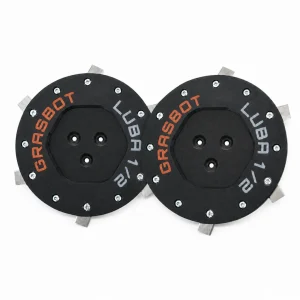
Mowing disc for Mammotion LUBA 1 AWD & LUBA 2 AWD – cutting disc
from 81,90 € Choose variant -
IN STOCK
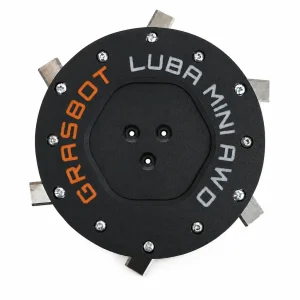
Mowing disc Mammotion LUBA MINI AWD 800, 1500 & MINI 2 AWD – cutting disc
from 39,90 € Choose variant -
IN STOCK
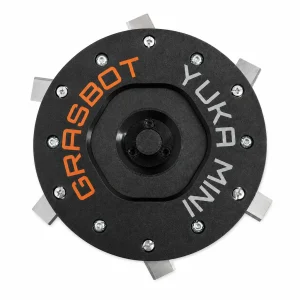
Mowing disc Mammotion YUKA Mini & YUKA Mini 2 – cutting disc
from 39,90 € Choose variant
Mammotion: Four-wheel drive as a unique selling point
Mammotion is one of the younger companies in the lawn mowing robot market and has distinguished itself from the competition with a key decision: four-wheel drive. While most manufacturers rely on two driven wheels, the LUBA series runs on four—and can therefore handle slopes up to 80 percent. For properties with embankments or pronounced hillside terrain, this was for years the decisive buying argument.
In the meantime, the range includes three product lines that differ fundamentally in the cutting system. Anyone ordering replacement parts should know this: the mowing discs are not interchangeable between the series—not even with an adapter.
An overview of the model families
| Model | Area / Special feature |
|---|---|
| LUBA 1 AWD | up to 5,000 m², all-wheel drive, slopes up to 80 % |
| LUBA 2 AWD | successor up to model year 2024, same mowing disc mount |
| LUBA MINI AWD | 800 and 1,500 m², more compact mowing deck |
| LUBA MINI 2 AWD | successor to the MINI series, mount unchanged |
| YUKA Mini | 500 to 1,000 m², with sweeping module |
| YUKA Mini 2 | second generation, same mount as Mini |
Typical Problems with Mammotion Robots
Compatible mowing discs
For the larger models, the mowing disc for LUBA 1 AWD and LUBA 2 AWD fits; for the compact series, the disc for LUBA MINI AWD and MINI 2 AWD; and for the sweep module series, the mowing disc for YUKA Mini. All three are available with 6, 7 or 9 blades – the blades are delivered fully assembled.
How many blades are sensible?
More blades do not mean more cutting power—the motor remains just as strong. What changes is the number of cuts per revolution. On steep slopes, the 6-blade version is often the more practical choice, because fewer blades offer less surface area for stones and the more frequent replacement turns out to be cheaper. On flat ornamental lawns with daily mowing, the 9-blade version is more likely to pay off.